Crochet Lemon Pattern Free to Stitch Zesty Summer Joy
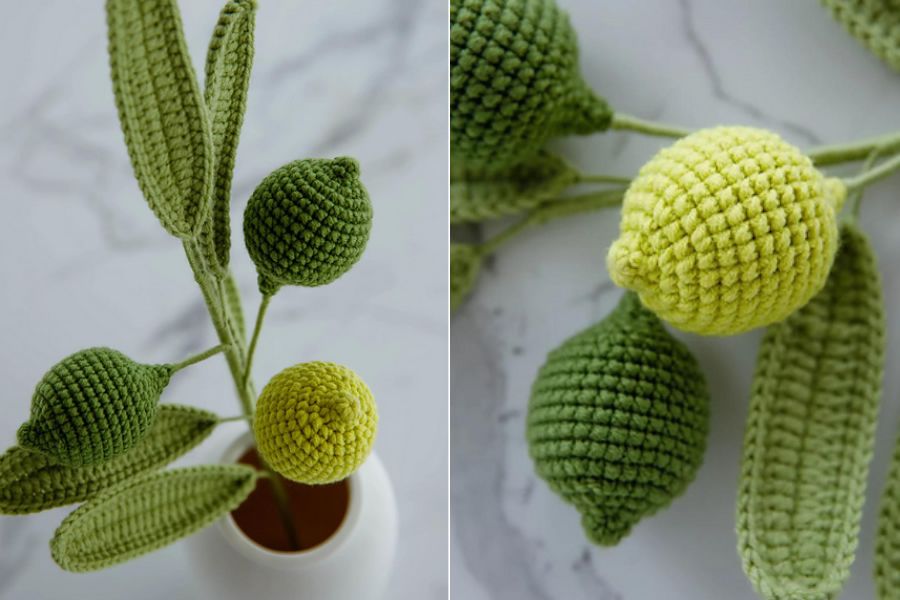
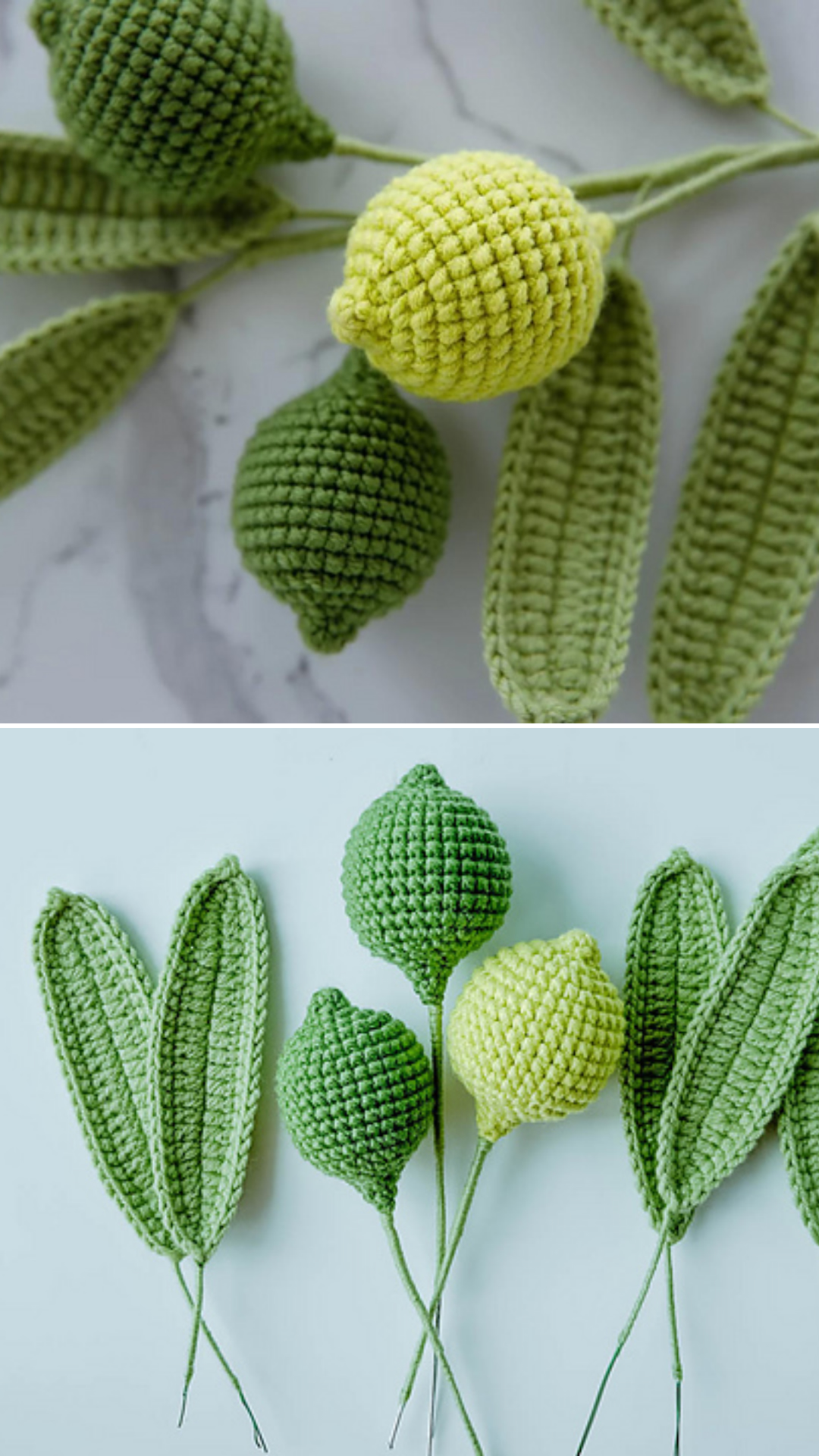
Bring the bright, sunny feeling of a citrus grove right into your living room with a handmade crochet lemon branch. This charming craft features plump yellow and green fruits nestled among long, structured leaves on a sturdy stem that looks wonderful in a simple white vase.
Creative and Functional Uses
A crocheted lemon branch brings a fresh pop of color to any room without ever needing water or sunlight. You can display the full stem as lasting home decor or use individual fruits as thoughtful handmade gifts for friends.
Beyond standing alone in a vase, these cheerful citrus pieces work wonderfully as playful embellishments for everyday accessories. You can easily attach a smaller lemon to keychains, tote bags, cozy blankets, scarves, or summer hats for extra personality.
Essential Materials and Yarn Choice
To achieve a smooth, neat texture that holds its round shape, you will want to use Hookok Milk Cotton DK yarn. This double-knitting weight yarn pairs perfectly with a 2.5 mm crochet hook to create tight, even stitches.
Gathering all your supplies before you begin makes the crafting process smooth and enjoyable. Here is everything you need to assemble your zesty lemon branch:
- Yarn: Three distinct shades including bright yellow, light green, and dark green.
- Hook: A 2.5 mm crochet hook to keep your tension firm.
- Support Wires: One flower rod measuring 16 inches long by 0.08 inches in diameter (40 cm x 2 mm) and iron wire measuring 6 inches long by 0.02 inches in diameter (15 cm x 0.4 mm).
- Notions: A stitch marker, darning needle, sharp scissors, soft fiberfill stuffing, and hot melt adhesive.
Skill Level and Gauge Details
This pattern is very beginner-friendly because it provides clear, detailed instructions for every single round and stitch. While you might encounter a few new techniques like the magic ring or picot stitch, patience and practice will help you master them quickly.
No strict gauge is required for this project, so you do not need to stress over exact measurements before starting. The final size of your lemons and leaves will naturally depend on your personal tension, though you can adjust your hook size if you want larger or smaller fruit.
Stitches and Abbreviations
The pattern uses standard US crochet terms throughout the entire design. Familiarizing yourself with these basic abbreviations will help you read through the rounds smoothly:
- Ch: Chain
- Sc: Single crochet
- Hdc: Half double crochet
- Dc: Double crochet
- Ss: Slip stitch
- Sc2tog: Single crochet two together
- Ps: Picot stitch
Special Stitches and Techniques
The single crochet two-together (sc2tog) is an essential decrease stitch used in Rounds 14, 15, 16, and 17 to gently taper the ends of the lemon. To work this stitch, insert your hook into the first stitch and pull up a loop, insert into the next stitch and pull up another loop, then yarn over and pull through all three loops on your hook.
For the long, pointed leaves, you will use a chain 1 picot stitch at the tip during Round 2 to create a crisp, natural point. Simply work one chain stitch and then slip stitch directly into that first chain to form a tiny decorative loop.
Helpful Pattern Notes
All parts of this citrus branch are worked in continuous or joined rounds using US crochet terminology. You will start Round 1 with a magic ring so there is no hole at the tip of your fruit.
Each new round begins with a chain 1 unless the instructions tell you otherwise. At the end of every round, you will use a slip stitch to join your work neatly before moving forward.
Tips and Tricks for Success
Keeping your stitches tight is the best secret for making amigurumi fruit that looks clean and professional. If your stitches are too loose, the white fiberfill stuffing might peek through the bright yellow or green yarn.
Always place your stitch marker in the very first stitch of every round so you never lose your place. Counting your stitches at the end of each section prevents accidental increases or decreases that could warp the oval shape of your lemons.
When stuffing your fruit with fiberfill, add small tufts at a time and push them firmly into the rounded ends. Proper stuffing gives the yellow and green lemons their plump, realistic silhouette without stretching the yarn fibers out of shape.
The thin iron wire is a wonderful secret weapon for giving your crocheted leaves realistic movement and structure. Crochet right over the wire along the edges of the leaves so you can gently bend and pose them on the branch.
Using hot melt adhesive requires a careful touch so glue does not seep onto the outside of your clean stitches. Apply a small amount of glue when securing the leaves and fruits to the 16-inch flower rod, then wrap green yarn tightly around the stem to hide the wire completely.
Take your time shaping the stem and arranging the yellow ripe lemon alongside the unripe green ones for a natural look. Mixing both shades of green with the sunny yellow creates an eye-catching display that celebrates summer joy all year long.